THREE:Although announced with the Budget, the proposed change in the sugar duties formed a separate and more momentous question. At that time, strictly foreign sugar was virtually prohibited by the excessive differential duties¡ªBritish plantation sugar paying a duty of 25s. 3d. per cwt., foreign, of 66s. 2d. When the Whig Administration had proposed to diminish this enormous difference, the Tories had pleaded the injustice to the West India landlords of taking away their slaves, and then exposing them to competition with countries still possessing slave labour. The question had thus become one of party. The Whigs were pledged to consult the interests of the British consumer; the Tories to protect the West Indies; and beating the Whigs on this very point, the Tories had turned them out of office. The British consumer had, however, happily some voice in the elections, and the problem was now to conciliate him without a glaring breach of consistency. Accordingly, the tax on our colonial sugar was to be left untouched, as was the tax on foreign sugar, the growth of slave countries; but henceforth it was proposed that the duty on foreign sugar, the produce of free labour, should pay only 10s. more than colonial. Thus was the first great blow struck at the protective sugar duties, and at that West Indian party which had so long prevailed in Parliament over the interests of the people. But the battle had yet to be fought.The Cabinet, by a very considerable majority, declined giving its assent to the proposals which the Minister thus made to them. They were supported by only three members of the Cabinet¡ªthe Earl of Aberdeen, Sir James Graham, and Mr. Sidney Herbert. The other members of the Cabinet, some on the ground of objection to the principle of the measures recommended, others upon the ground that there was not yet sufficient evidence of the necessity for them, withheld their sanction.
FORE:
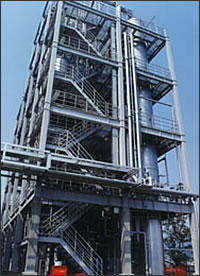
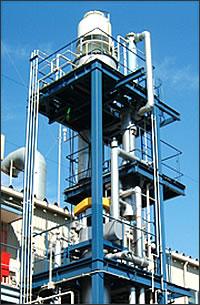
Methanol refinement systems, amyl alcohol refinement systems, ethanol refinement systems, hexanol distillation systems, propanol refinement systems, cyclohexanol distillation systems, isopropanol dehydration systems, ethylene glycol recovery systems, and butanol distillation systems.
FORE:In one respect the general election happened at an unseasonable time. It was the driest and warmest summer on record. On the 28th of June, the hottest day in the year, the thermometer stood at eighty-nine and a half degrees in the shade. Several deaths were occasioned by sunstroke; among the victims were a son of Earl Grey, and Mr. Butterworth, the eminent law bookseller, a candidate for Dover. The elections were carried on in many places with great spirit. But, though there were exciting contests, the struggles were not for parties, but for measures. There were three great questions at issue before the nation, and with respect to these pledges were exacted. The principal were the Corn Laws, Catholic Emancipation, and the Slave Trade. In England and Wales one hundred and thirty-three members were returned who had never before sat in Parliament. This large infusion of new blood showed that the constituencies were in earnest. In Ireland the contests turned chiefly on the Catholic question. The organisation of the Catholic Association told now with tremendous effect. In every parish the populace were so excited by inflammatory harangues, delivered in the chapel on Sundays, after public worship, both[254] by priests and laymen¡ªthe altar being converted into a platform¡ªthat irresistible pressure was brought to bear upon the Roman Catholic electors. The "forty-shilling freeholders" had been multiplied to an enormous extent by the landlords for electioneering purposes. Roman Catholic candidates being out of the question, and the Tory interest predominant in Ireland, electioneering contests had been hitherto in reality less political than personal. They had been contests for pre-eminence between great rival families; consequently, farms were cut up into small holdings, because a cabin and a potato garden gave a man who was little better than a pauper an interest which he could swear was to him worth forty shillings a year. The Protestant landlords who pursued this selfish course little dreamt that the political power they thus created would be turned with terrible effect against themselves; and they could scarcely realise their position when, in county after county, they were driven from the representation, which some of them regarded as an inheritance almost as secure as their estates. The most powerful family in Ireland, and the most influential in the Government, was that of the Beresfords, whose principal estates lay in the county Waterford, and where no one would imagine that their candidate could be opposed with the least prospect of success. But on this occasion they suffered a signal defeat. The forty-shilling freeholders, as well as the better class of Roman Catholic farmers, were so excited by the contest that they went almost to a man against their landlords. In many cases they had got their holdings at low rents on the express condition that their vote should be at the disposal of the landlord. But all such obligations were given to the winds. They followed their priests from every parish to the hustings, surrounded and driven forward by a mass of non-electors armed with sticks and shouting for their church and their country. O'Connell was now in his glory, everywhere directing the storm which he had raised. When the contest was over, many of the landlords retaliated by evicting the tenants who had betrayed their trust and forfeited their pledges. They were tauntingly told that they might go for the means of living to O'Connell and the priests. This was a new ingredient in the cauldron of popular discontent, disaffection, and agrarian crime. The gain of the Catholic party in Ireland, however, was more than counterbalanced by the gain of the opposite party in England and Scotland.Arnold had not been able to bring any artillery with him; Montgomery had a little. They had about twelve hundred men altogether; and with this force they now marched upon Quebec. On the 20th of December they commenced firing on the town from a six-gun battery; but their cannon were too light to make much impression¡ªthey had no guns heavier than twelve-pounders, and these were soon dismounted by Colonel Maclean and his sailors. The Americans withdrew their guns to a safer distance; and their troops were desirous to abandon the enterprise as impracticable, but the commanders engaged them to continue by holding out a prospect of their plundering the lower town, where all the wealth lay. On the last day of the year, soon after four in the morning, the attack was commenced. Two divisions, under Majors Livingstone and Brown, were left to make feigned[222] attacks on the upper town, whilst the rest, in two lines, under Montgomery and Arnold, set out amid a blinding snow-storm to make two real attacks on the lower town. Montgomery, descending to the bed of the St. Lawrence, wound along the beach to Cape Diamond, where he was stopped by a blockhouse and picket. Haying passed these, he again, at a place called Pot Ash, encountered a battery, which was soon abandoned. Montgomery then led his troops across huge piles of ice driven on shore; and no sooner had they surmounted these than they were received by a severe fire from a battery manned by sailors and Highlanders. Montgomery fell dead along with several other officers and many men; and the rest, seeing the fate of their commander, turned and fled back up the cliffs. Arnold, at the same time, was pushing his way through the suburbs of the lower town, followed by Captain Lamb with his artillerymen, and one field piece mounted on a sledge. After these went Morgan with his riflemen; and as they advanced in the dark, and muffled in the falling snow, they came upon a two-gun battery. As Arnold was cheering on his men to attack this outpost, the bone of his leg was shattered by a musket-ball. He was carried from the field; but Morgan rushed on and made himself master of the battery and the guard. Just as day dawned, he found himself in front of a second battery, and, whilst attacking that, was assailed in the rear and compelled to surrender, with a loss of four hundred men, three hundred of whom were taken prisoners. Arnold retreated to a distance of three or four miles from Quebec, and covered his camp behind the Heights of Abraham with ramparts of frozen snow, and remained there for the winter, cutting off the supplies of the garrison, and doing his best to alienate the Canadians from the English.
Hexane distillation systems, tall oil distillation systems, benzene distillation systems, lubricating oil refinement systems, xylene-free distillation systems, low-boiling gas distillation systems, ethylbenzene recovery systems, fusel oil distillation systems, naphthalene distillation systems, propylene recovery systems, and turpentine oil distillation systems.
FORE:
Ether distillation systems, camphor distillation systems, epichlorohydrin distillation systems, aniline distillation systems, dioxane refinement systems, acetonitrile distillation systems, furfural refinement systems, formalin distillation systems, cyclohexane distillation systems, monoethanolamine rectification systems, polyglycol ether distillation systems, dimethylformamide recovery systems, acrylic glycol ether distillation systems, acrylonitrile refinement systems, acetone recovery systems, pyridine distillation systems, methyl ethyl ketone recovery systems, picoline distillation systems, methyl isobutyl ketone recovery systems, and acetaldehyde recovery systems.